
Beyond the classroom: criminal justice at LR
This spring, students taking Introduction to Criminal Justice at Lenoir-Rhyne University toured a juvenile detention facility and met law enforcement officers as part of a hands-on learning approach designed to connect classroom concepts with real-world practice.
Experiential learning opportunities play an essential role in the curriculum for Shahin Tasharrofi, Ph.D., assistant professor of criminal justice and assistant dean of the College of Humanities and Social Sciences. According to Tasharrofi, the goal is to help students see how criminal justice systems function in practice and how those systems are experienced by the people who work within them.
“Course readings — books and articles — provide a foundation, but the information becomes truly meaningful when students can relate direct experiences and personal observations to what they read,” he said.
For nursing major Karah Hurlbut ’28, the tour of Alexander County’s juvenile detention facility left a lasting impression.
“One thing that still sticks with me is a young boy who was hours away from being sent to an adult facility,” she said. “The moment juveniles turn 18, they’re transferred — on their birthday. That was surprising, and weeks later, I’m still thinking about him.”
The course also uses structured reflection to help students process what they observe. Those who attended the facility tour completed observational reports, while students who did not participate engaged with assigned readings about juvenile detention. In a later class discussion, students compared their expectations with the perspectives of classmates who had visited the facility.

Psychology major Riley Schutt ’28 said the detention center tour prompted her to reflect on the environment and structure of daily life within the facility.
“If we want juveniles to be rehabilitated, then we need to stop putting them in environments that may be making them worse, not better,” she said.
In addition to the detention center visit, students hear directly from professionals working in the field. Madison Marlowe ’27, a politics and law major, said a recent guest speaker session with Hickory Police Department officers stood out to her.
“One thing that stuck with me from the HPD officers’ class visit was how highly they spoke about the use of body cameras in policing, even going so far as to say that they wouldn’t do their jobs without them,” said Marlowe. “I was happy to hear that this relatively new technology benefits both citizens and police officers alike.”
These exchanges with guest speakers help students better understand the realities of the profession, including its challenges and the tools used in practice, while also introducing them to a variety of career paths in criminal justice. Most students in the course are criminal justice majors or minors who intend to pursue careers in the field. Others enroll to explore an interest in criminal justice. The course also draws students from other majors, including those considering careers in psychology, education and health sciences. This mix of students creates opportunities to connect course concepts to a wide range of real-world contexts.
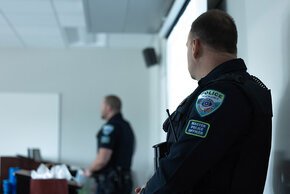
Deep reflection is part of the learning process Tasharrofi aims to foster.
“The criminal justice system, particularly law enforcement, draws a lot of public criticism, so I want my students to actually observe how the system operates in practice — and think about what they would do differently,” he said.
He also pointed to future opportunities for applied learning, including plans for a study abroad experience in Norway in 2027, where students will examine how different countries structure their criminal justice systems.
News & Events
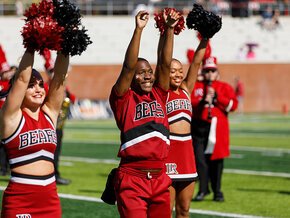
Lenoir-Rhyne welcomes alumni and friends back to campus Oct. 16–17 for Homecoming 2026, featuring milestone reunions, favorite traditions, the Eastside Commons groundbreaking and Bears football.
View More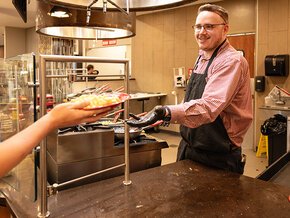
New director of food service Gray Stone ’21 returns to LR focused on providing a dining experience that responds to student needs and makes campus feel like home.
View More