
How Lenoir-Rhyne built literacy practice into every year of teacher preparation
At many universities, teacher preparation still separates coursework from classroom practice. Future educators often spend years studying instructional theory before fully applying what they have learned during student teaching.
At Lenoir-Rhyne University, leaders chose a different path — one shaped by research, school partnership and growing urgency around early literacy outcomes.
As EdNC previously reported, even before the ratification of North Carolina’s 2021 Excellent Public Schools Act, Lenoir-Rhyne University served as a model for the alignment of coursework with research on how children learn to read, while expanding opportunities for classroom application beginning in candidates’ junior year.
But the legislation provided something universities often need to make systemic change — leverage.
“It allowed us to rethink our entire core sequence,” said Monica Campbell, the university’s professor of education and coordinator of its elementary education program. “Not just what we teach, but when and how teacher candidates learn to apply it.”
The result is an in-depth literacy coursework sequence aligned to the science of reading, embedding classroom practice alongside instruction throughout nearly every year of an elementary education candidate’s preparation.
Sophomore Year: Leaning Literacy by Teaching Literacy
The literacy sequence now begins in sophomore year, earlier than many preparation programs. Candidates take an early literacy course alongside a co-requisite lab, putting theory into practice as they tutor kindergarten students at Southwest Primary School, a long-standing university partner.
The focus mirrors what research identifies as foundational reading development:
- Oral language development
- Phonological and phonemic awareness
- Alphabetic knowledge
- Concepts of print
Faculty intentionally strengthened instruction around oral language, an area increasingly recognized as critical to reading comprehension and success.
Rather than simulated practice, candidates begin working with real students immediately, building instructional habits grounded in observation and responsiveness.
Junior Year: Following the Child, Deepening the Science

Rather than starting over each year with new students, Lenoir-Rhyne candidates tutor the same child as they progress through the early grades. As their kindergarten students matriculate into first grade, teacher candidates move with them, creating continuity rarely experienced in educator preparation programs.
During the first semester of junior year, candidates take Foundations of Reading I, studying and applying phonics, spelling, morphology, and fluency.
By spring semester, Foundations of Reading II shifts its focus to vocabulary and comprehension, deepening candidates’ understanding of how meaning is built from text. Coursework and classroom application continue to unfold simultaneously, reinforcing one another in real time.
Throughout the experience, candidates apply literacy standards, curriculum, and assessments aligned to the same tools used daily in traditional classrooms, including UFLI and mCLASS, respectively. Rather than practicing in isolation, teacher candidates learn to respond to student needs as instruction happens.
Candidates participate in continuous teaching and learning cycles that mirror the work of practicing educators:
- Screening students
- Analyzing and charting data
- Progress monitoring every two weeks
- Adjusting instruction
- Measuring student growth

This approach allows candidates to move beyond learning instructional strategies, toward understanding how to make informed instructional decisions based on evidence. Student performance and progress data is consistently analyzed, recorded, and monitored through the use of a data wall.
Senior Year: From Reading to Writing
By senior year, candidates continue to advance with their assigned students, now tutoring second graders they have supported since kindergarten.
The fourth literacy course and lab, Writing Methods, turns toward an area long identified as a national gap — writing instruction. The emphasis shifts from comprehension to composition, teaching future educators how to explicitly teach writing using evidence-based strategies.
Campbell summarizes the connection simply: “Reading is similar to inhaling, while writing is similar to exhaling. Both are essential. Writing remains the instructional component most often overlooked despite its deep connection to reading development.”
Lenoir-Rhyne’s program intentionally treats writing as the natural extension of literacy, rather than as an afterthought.
Coaching Beyond Campus
The partnership with Southwest Primary extends well beyond tutoring hours.
Campbell serves as a conduit, bridging communication between university coursework and classroom realities. She meets regularly with the elementary school’s teacher leadership specialist to discuss both the elementary students’ progress and needs, as well as the university candidates’ growth and opportunities for improvement.
Together, educators analyze student performance using shared data walls, ensuring instruction remains responsive and aligned.
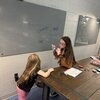
For teacher candidates, feedback happens both on campus and inside classrooms, tightening the connection between preparation and practice.
By fall of senior year, candidates are immersed in a demanding schedule that connects theory and practice, balancing university coursework with two days of tutoring and a weekly internship placement.
It is also their final semester working with students they have supported for three consecutive years. Candidates plan intentional celebrations and farewells, marking a close to the academic and relational journey they have shared since kindergarten.
In the spring, candidates transition fully into student teaching, entering classrooms having already accumulated years of instructional experience.
Results that Reflect Preparation
At Lenoir-Rhyne, literacy preparation is not confined to a single methods course or a final-semester placement.
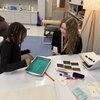
Teacher candidates learn to teach reading by applying the knowledge gained in university classrooms directly with students, screening readers, analyzing data, implementing evidence-based instructional strategies, monitoring progress, adjusting instruction, and repeating the cycle while watching growth unfold over time.
By the time candidates enter their own classrooms, literacy instruction, assessment frameworks, and data analysis are not new concepts. They have already spent years filling their tool belts with the appropriate resources and strategies to help children learn to read and write.
That sustained preparation is now visible in the results, as this year marked a milestone for Lenoir-Rhyne University. For the first time, 100% of elementary education candidates passed North Carolina’s Foundations of Reading (890) licensure assessment on their first attempt.
This outcome reflects more than successful test preparation. It signals deep alignment among research, coursework, clinical practice and school partnership, preparing graduates who enter classrooms ready to teach literacy from day one.
As North Carolina continues implementing the science of reading statewide, the challenge facing educator preparation programs is no longer whether change is needed, but how future teachers will be prepared to meet it.
At Lenoir-Rhyne University, that preparation begins early, unfolds alongside real children in real classrooms, and deepens through sustained partnerships with schools. As a result, new teachers enter the profession already equipped to do the work, ensuring more North Carolina students gain the literacy skills every child deserves — the power to read, write, and shape their own future.
This article first appeared on EdNC and is republished here under a Creative Commons Attribution-NoDerivatives 4.0 International License.
News & Events

As Lenoir-Rhyne prepares for a major renovation of Cromer Center, alumni, families and friends have a new opportunity to leave a lasting mark on the building through a personalized donor recognition wall.
View More
Hickory Young Professionals recognized three members of the Lenoir-Rhyne community for their professional accomplishments, community leadership and commitment to making a difference in the region.
View More