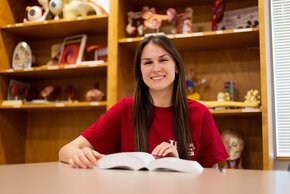
Patient care in action: Grace Kopka '26
In late February 2026, Grace Kopka ’26 boarded a flight to Washington, D.C. It was the start of a short journey with a lifesaving outcome.
The Lenoir-Rhyne nursing major from Lincolnton, N.C., had matched with a patient with acute myeloid leukemia and traveled to donate bone marrow stem cells for a transplant. Matches are rare but offer patients the potential for a full recovery.
“I never expected this. I saw a random ad on Instagram in 2021for the Donor Program,” Kopka recalled. “I read about it and thought, ‘How cool is this that you can help someone go into remission from cancer?’ I sent in a swab and kind of forgot about it, to be honest.”
Years later, a call from the National Marrow Donor Program brought the moment back into focus. At first, Kopka assumed it was spam.
“Then I realized someone needed me,” she says. “If I could be the last shot for them, I was in.”
For Kopka, the decision also reflects the perspective she has gained as a nursing student.
“When you watch medical programs on TV, the doctor is the one who does everything,” she says. “In reality, the nurse is the heart of healthcare. We do all the actions and all the hands-on care.”
The experience also reflected the supportive culture Kopka has found within Lenoir-Rhyne’s nursing program. When the timing of the donation overlapped with the academic semester, faculty helped make sure she could move forward.
Tabitha Toney, Ph.D., chair of the School of Nursing, encouraged Kopka to proceed with the donation and stayed in contact with her throughout the process.
“She immediately said, ‘Of course, go do this. We will make it work,’” Kopka said. “She even gave me her personal phone number so I could reach her if I needed anything.”
That sense of teamwork extends throughout the program.
“Nursing school isn’t easy and we’re all together and helping each other up when we get knocked down,” she added. “It’s not competitive — it’s like a family. I know my professors and they know me.”
Prior to the donation, Kopka received multiple injections to stimulate her stem cell production and move the cells int her bloodstream. Once in Washington, she completed the donation via a peripheral blood stem cell procedure - the most common method used for transplants.
“The shots were painful, and the fourth day felt like flu symptoms,” she says. “But I kept thinking, this is what my patient is dealing with all the time. I can do this for a few days.”
During the donation, blood was drawn, filtered to separate the stem cells and then returned to her body. The procedure lasted about four hours for Kopka, and the stem cells were then transported to another hospital in the U.S., where her recipient was preparing for transplant.
Reflecting on the experience, Kopka hopes more people will consider joining the donor registry.
“It’s interesting to me because I know the nursing side of it,” she says. “That knowledge means I can tell non-nurses that donors are well cared for. We get resources and check-ins for months and weeks before and after the procedure. This isn’t anything to be afraid of.”
Although millions of people have joined the registry through the National Marrow Donor Program, only about 6,000 to 7,000 matches occur each year, making each successful match critical for patients who have no other options.
“Sign up, send a swab,” Kopka said. “Maybe you’ll save someone’s life.”
News & Events
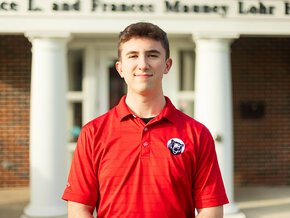
Connor Orr prepares for a career in counseling through hands-on experience and leadership roles, so he can help other young people as they navigate life's transitions.
View More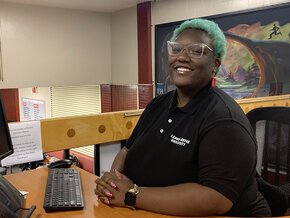
Whether at the Cromer desk or across campus, Ace Peake ’28 is known for showing up, getting involved and making a difference — helping others feel seen, supported and connected.
View More