
Summer McGee on the heart of LR: people, purpose and place
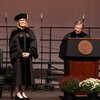
Summer McGee, Ph.D., was inaugurated as Lenoir-Rhyne University’s 13th president on October 16, stepping into leadership at the heart of a vibrant academic community. She emphasizes relationships, student-centered learning and helping each student discover their purpose and potential.
“Lenoir-Rhyne University is already a great university, and I think we are poised to become the greatest Lutheran university in the nation,” McGee said. “We are at a real inflection point where we are poised to grow, achieve greater athletic excellence, and to achieve greater brand recognition as a top university. Together, we will shine ever brighter in the days ahead.”
Before joining Lenoir-Rhyne, McGee served as president of Salem Academy and College in Winston-Salem and as founding dean of the School of Health Sciences at the University of New Haven. A scholar of health policy and bioethics, she has published extensively, taught for nearly two decades, and served on multiple boards, including the Council of Independent Colleges Board of Directors and Novant Health’s Triad Region Board.
McGee’s inauguration marked both a leadership transition and a celebration of the LR community, its values and traditions. Her presidency promises a future defined by creativity, courage and care — hallmarks of the university she now leads.
What’s something about you that isn’t on your CV but says a lot about who you are?
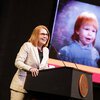
I grew up in a small town on a farm and was a 4-H kid. All of these experiences taught me the value of hard work. It was so formative for me — I learned the value of community involvement and got to see the fruits of my labor. My projects included cake decorating, gardening and showing dairy goats and chickens at the fair. To be fair, I was more the official eater of the garden, so my parents deserve most of the credit there. But I loved showing livestock, with its mix of learning, showmanship and time with animals. One of my chickens even made it to the Indiana State Fair.
The one artistic skill I still claim today is cake decorating. I’ve made sculpted cakes — once with a mermaid perched on a rock, others as traditional wedding cakes. For my AP English project on Dante’s Inferno, I even created the rings of hell out of cake. It was fun.
If you could describe your leadership style in three words, what would they be?

First, I’d say servant leader. There’s no job too big or too small — if I see trash on campus, I’ll stop and pick it up. For me, leadership starts with caring for and being in service to others. Second would be growth-oriented. I love building things and creating opportunities, but I also love helping the people I work with grow as individuals and professionals. Third is creativity. I get excited about new ideas and imagining what could be possible. I try to lead with creativity myself and inspire it in others.
What is the best piece of advice you’ve ever received, and who gave it to you?
I’ve been given a lot of advice about being a college president, but one of the best pieces I ever received was at Harvard’s new presidents program: the presidency is a marathon, not a sprint. That really stuck with me. You have to take care of yourself as a whole person and make time for the things that fill up your cup. That is what we teach our students at LR, but we also need to remember it for ourselves as leaders. For me, that means exercise, meditation and prayer, and little things like doing my Wordle every morning before work. When you’re a college president, it’s easy to let the role take every minute of the day, but you can’t lose sight of the things that give you meaning and fulfillment. I’m grateful I learned early on how important it is to create and protect that space.
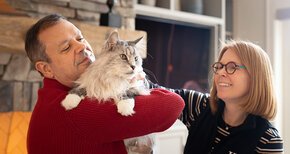
On Saturday morning, if you're not here on campus, where are you and what are you doing?
I’d definitely be at a farmers market—and now the Hickory farmers market! I’ve loved them for as long as I can remember — in college and grad school, I always made a point to go. I love the experience of discovering what others have grown, baked or made and valuing their labor. One of the things I love about Hickory is its Saturday market: the energy, the fresh produce and the chance to connect with the community make it the perfect way to spend a morning.
What first attracted you to Lenoir-Rhyne and sealed the deal when you were made the offer?
The first thing that attracted me to Lenoir-Rhyne was its strong reputation in the state and region. People clearly respect the university, especially for excellence in its professional programs and athletics. What really sealed the deal for me was visiting campus and meeting the community — after my campus conversation in Belk Centrum, I met faculty, staff and students. Their genuine care and love for this place were just so evident from day one, and I thought, “This is a place where I could see myself.” It’s a really wonderful family environment that cares deeply about each other, our students and our broader community.
Were there any moments during your first visits here that made you think, “Yes — this is the right place for me”?
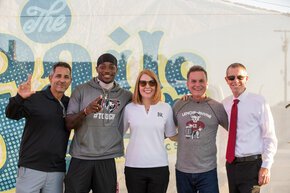
So many people talk about how kind and supportive the Lenoir-Rhyne community is, and then you get here and realize, yeah, that’s really how people are. One moment that really stood out to me was during my interview when my husband Glenn, who hadn’t planned to be involved that day, drove along to explore Hickory. I’ll never forget when then-chair of the board, Madeleine Dassow, said, “Would Glenn like to join for the day? Would you like him to sit in and hear some of the sessions and come to the campus meeting?”
That gesture — including him in the process and treating him as part of the experience — really made me feel the family spirit here. They cared as much about my spouse being part of the day as they did about me. It was incredibly meaningful, and I realized, yes — this is a place where we could both see ourselves committing to this community.
What have been some experiences at Lenoir-Rhyne that have left a really strong impression on you?
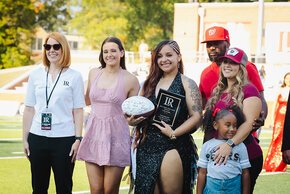
The students here are truly amazing. They are so thoughtful, kind, caring and curious about life and the world. I love spending time talking to our students—they are so happy and excited about finding their purpose and are so grateful for the opportunities LR gives them. In particular, one student shared with me how much Kate’s Cupboard meant to her—having that resource on campus means that she can focus on her education rather than worrying about where her next meal may come from.
I’ve also been astonished by how many people have shared stories about three, four or even five generations of Lenoir-Rhyne alumni in their families. That sense of legacy — families sending sons and daughters here across generations, shaping their lives and helping them find purpose — is a consistent theme. It really speaks to what an amazing institution this is and the strength of the Lenoir-Rhyne family.
Fast-forwarding five years, what would you want people to say about Lenoir-Rhyne under your leadership?
I hope we’re recognized for being an institution that is bold and innovative. That we are a place that has a distinctive approach to educating our students as whole people and preparing them for life. Lenoir-Rhyne is already a premier university with so many strengths, but I want the wider world to see it too.
Over the next five years, I hope we’ll grow our undergraduate and graduate student bodies, build on our strengths and be an institution responsive to this time — a time of rapid technological change. I want us at the forefront, preparing students for an AI-driven future and the pace of change in the world. I also hope that as we do this, we continue to nurture the relationships and community that make Lenoir-Rhyne feel like a family and lean into our Lutheran heritage. Success will mean looking back and saying we grew, we innovated and we had a clear sense of what makes us distinctive, excellent and deeply connected to the people who make this place so special.
What do you think is Lenoir-Rhyne’s superpower — what do we do better than anybody else?
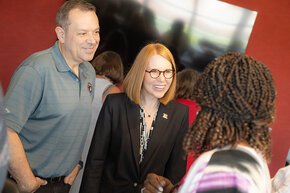
I think Lenoir-Rhyne helps students find and tap into their potential better than anyone else. Of course, we prepare students for professions, whether in health fields or other areas, but it really comes back to vocation. We help students discover their calling and the ways they can make the world a better place, giving their lives meaning and purpose. I’ve heard dozens of stories of students who came here unsure of their place in the world and, four years later, left knowing not only what they wanted to do professionally but also the impact they wanted to make. That sense of purpose makes it easier to develop a career — and I think that’s what Lenoir-Rhyne does best.
What is a lesson from outside of higher ed, maybe from business or sports/pop culture, that influences your leadership?
It probably won’t surprise you that I take a lot of leadership lessons from healthcare, given my background. One thing healthcare has done so well is focus on the patient experience — adopting technology, getting feedback, responding quickly and really putting people first.

I think the same lesson applies to education: if we put students at the center of every decision, if we ask ourselves, “How is this going to impact students? Is this really in their best interest?” — that’s when we see real success. We need to gather more data to understand our students’ experiences and rapidly respond based on that information to continuously improve student life. The more student-centered we are, day in and day out, the stronger and better we’ll be as an institution.
What is the last book you read and what did you think of it?
I was reading Remarkably Bright Creatures, which I loved — it was part of our Visiting Writers series and it’s just such a beautiful, imaginative story.
At the same time, I’m in the middle of Unreasonable Hospitality. It’s full of fascinating stories from the restaurant and hospitality world with all these practical leadership lessons sprinkled in. I love it because I love food, I love restaurants, and I love learning leadership lessons from different industries.
On a similar note, one of my favorite shows right now is Somebody Feed Phil on Netflix. Short, lighthearted episodes of a comedian traveling the world, tasting the local delicacies. Just so fun and easy to watch at the end of the day.
If you could send a short message to every LR alum right now, what would you say? When alumni come back to campus, what’s one experience you hope they’ll have that reflects the LR you’re building?

Our alumni are so essential to Lenoir-Rhyne’s future. They help us find the next generation of Bears, mentor students, create internships, open doors for that first job.
Their generosity, their positivity and their loyalty — that’s part of what first drew me here. I hope every alum who comes back feels that same connection, that they’re part of a strong network of support and opportunity for current students and that they can give back in whatever way feels right to them.
When alumni return to campus, I hope they feel the infectious energy, the love and the care that exists here. I hope it reminds them of their time as a student but also fills them with optimism for the future — the same feeling I get when I walk around this campus. Honestly, I don’t think we talk enough about love in higher education. I love to talk about love, because we should love our students, love our faculty and staff and love our alma mater. I hope alumni feel that love and care that’s across this campus today.
It’s an exciting new day at LR, thanks in part to the strong foundation we have, thanks to our previous leaders, including Dr. Fred Whitt. Come back, share your story, find a way to contribute. There’s so much to be proud of here and while institutions must grow, change and innovate to stay relevant, the core of Lenoir-Rhyne is still the same. I hope alumni feel that, feel the energy and see the opportunities to be part of this conversation and this community — because that’s what makes this place so special.
News & Events
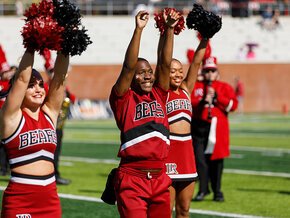
Lenoir-Rhyne welcomes alumni and friends back to campus Oct. 16–17 for Homecoming 2026, featuring milestone reunions, favorite traditions, the Eastside Commons groundbreaking and Bears football.
View More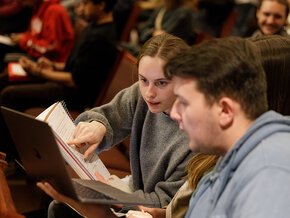
Bears Engage brings music, theater, scholarship and conversation together as Lenoir-Rhyne marks America’s 250th anniversary and considers where we'll go in the years ahead.
View More